
Home / Machines / Rotary Table Shot Blasting Machine for Heavy Steel Plate
Rotary Table Shot Blasting Machine for Heavy Steel Plate
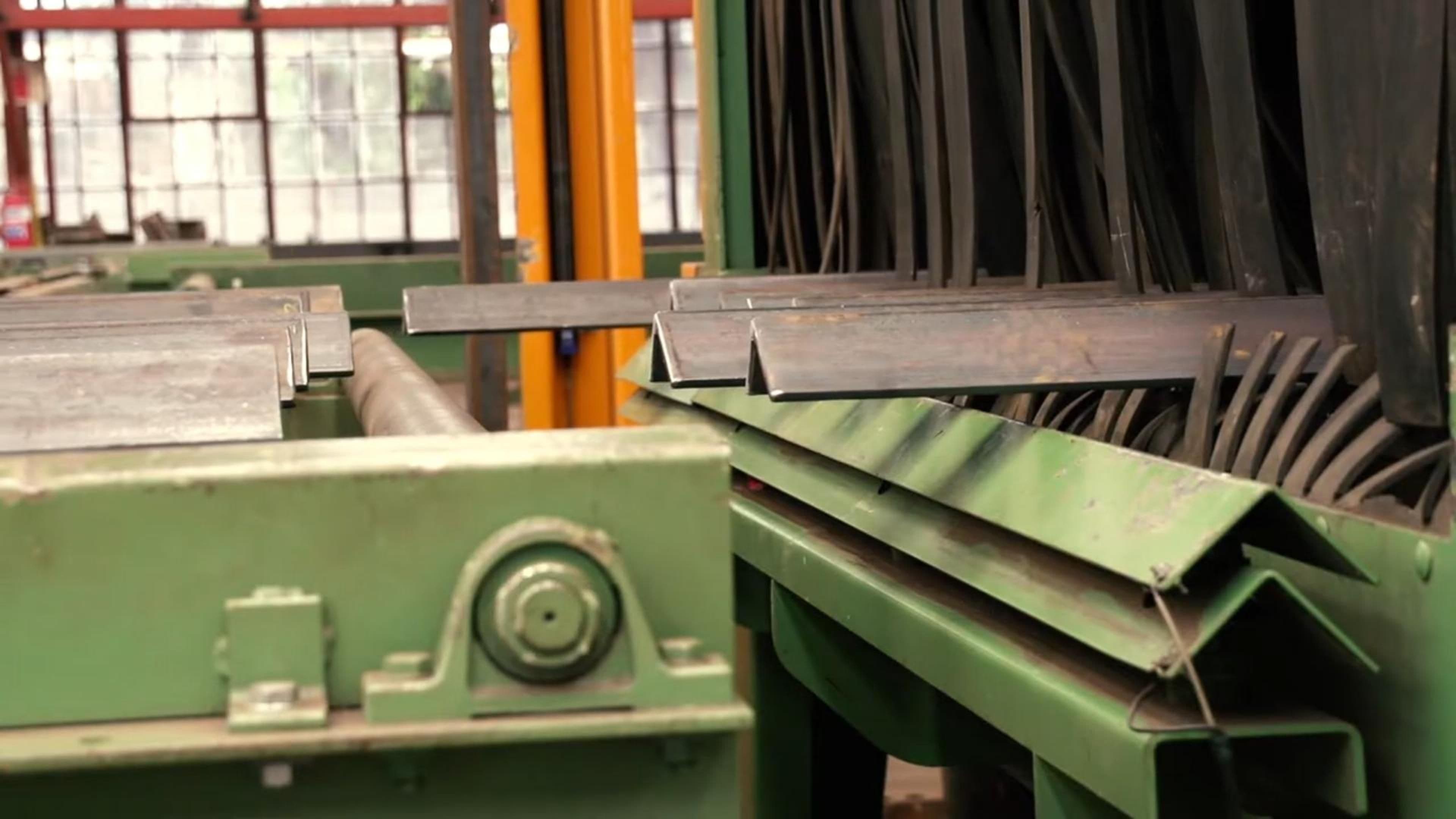
Rotary table shot blasting machine for heavy steel plate and structural sections. The blast zone stays fixed while a turning table carries and indexes the workpiece through the wheel pattern, giving repeatable coverage, a compact footprint and full abrasive recovery for parts too heavy for belt or hook handling.
PREPARE FOR
WHAT’S NEXT.
Match workpiece handling, blasting configuration and production flow to your application.
Request a quotationFixed blast zone, rotating work
A steel plate weighing several tonnes does not fit on a mesh belt, and it will not sit still on a roller conveyor while it is being blasted. The rotary table answers this differently from every other machine in the family: the blast equipment stays put and the work moves. A turntable carries the plate into the blast zone, indexes it through the pattern of the wheels, and carries it back out. Everything else about the machine — fixture stiffness, guard height, how shot is contained — follows from that one decision.
That is why this format is used on plate and structural work rather than on loose castings. When a workpiece cannot be indexed by a belt or a hook, the machine has two options: bring the blast to the work, or pass the work through a fixed blast zone. Rotation also costs far less floor space than a walk-through cabinet, which matters when the machine goes into a bay that is already served by overhead cranes.
Why rotate rather than sweep
- Fixed nozzle geometry, repeatable coverage — the blast wheels stay at one height and one angle. Coverage is then a function of the fixture's index position, not of wherever the plate happens to be sitting.
- Repeatability from plate to plate — the locating points are fixed, so the twelfth plate is presented to the blast in the same attitude as the first. On an order with several plates under one coating specification, that matters more than raw throughput.
- Compact installation — a smaller footprint than a continuous line, with one overhead crane serving both load and unload.
- Full abrasive recovery — the cabinet is enclosed, so shot falls into a controlled recovery circuit instead of ending up on the workshop floor.
Where uniformity actually degrades
A rotating table is not uniform by construction. Two effects have to be designed for rather than discovered on the floor.
Radius. Impact density at the centre of the plate is not the same as at the rim. The radius of rotation changes how much area the blast sweeps per unit of plate area, so the number of wheels and where they sit relative to the plate radius is the real design decision — not the nominal wheel count quoted on a datasheet.
Run-out. A plate that does not seat flat changes attitude during the rotation. A high spot lifts at one angular position and the shadow it throws travels with it, so a plate that appears properly clamped can still carry a shadow band around its full circumference. Locating the plate and its flatness belong to the blast specification, not to a separate handling problem.
Any part that must not be blasted on one face needs masking, and masking can only be specified sensibly once the fixture is defined.
Boundary of application
This format is for plate, structural sections and welded assemblies that are too heavy to handle on a belt and too heavy to hang. It does not replace a hook line, which is cheaper per part and better with mixed small components, nor a continuous mesh belt line, which beats it plainly on small parts and high volume. The usual decision inputs are the footprint and weight of the workpiece, the blast pattern required, how many faces have to be cleaned, and how often the part changes between jobs. These are confirmed against the actual workpiece after a drawing review and a sample test, not taken from a catalogue page.
DEFINE THE CONFIGURATION.
- Workpiece
- Steel plate, structural sections and welded assemblies too heavy for belt handling
- Handling
- Rotating turntable indexing through a fixed blast zone, crane load and unload
- Surface removal
- Mill scale, rust, paint and weld residue
- Coverage control
- Blast wheel layout reviewed against plate radius and the number of faces to clean
- Fixture
- Locating points and plate flatness confirmed from the workpiece drawing
- Changeover
- Fixture and blast pattern re-reviewed whenever part geometry changes
BRING US YOUR WORKPIECE.
Share a photo or drawing, material, maximum dimensions and expected output. These details help us review a suitable configuration.
Send project requirements