
PLC, HMI and remote monitoring in modern blast rooms
A modern blast room is a control problem as much as a blasting problem. This guide walks through what the PLC actually sequences, the interlocks worth demanding in writing, how process data should be captured for peening and coating work, and the predictable ways automated blast rooms fail in day-to-day production.
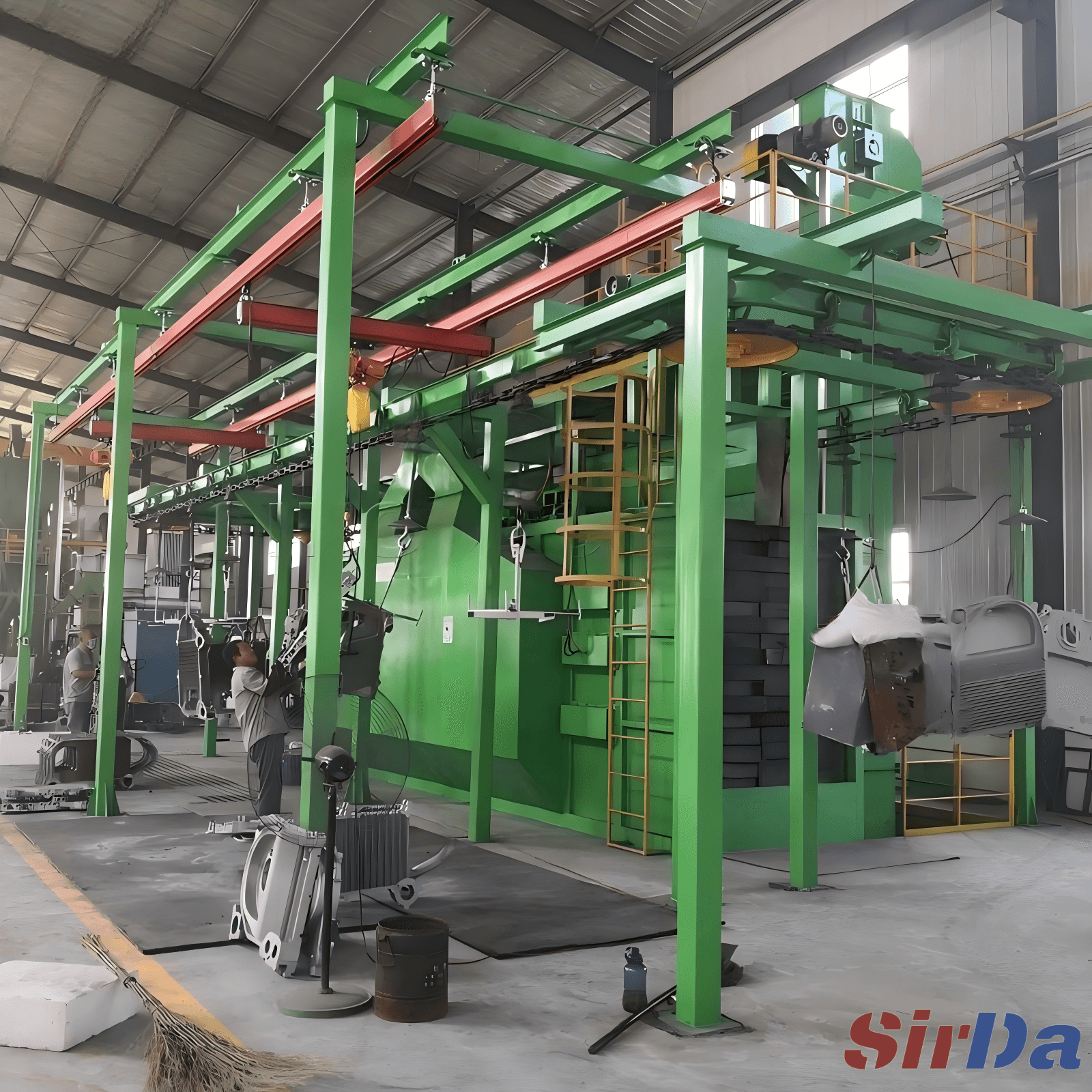
Blast rooms have quietly become control systems. Twenty years ago the machine was a wheel, a hopper and a timer, and the operator judged the result by eye. What replaced the eye is a small controller, a touchscreen and a set of drives.
What the controller is really responsible for
The modern control package sequences the handling system — infeed conveyor, seal curtain chamber, blast zone, outfeed — ramps the blast wheels up and down through inverters, meters media to each wheel through pneumatic control valves, and runs the dust collector in the correct order relative to everything else. None of that is exotic. What matters is that it holds a set of numbers steady while nobody is watching.
The blast wheel is the obvious place for variable speed. Changing motor frequency changes the velocity the abrasive leaves the impeller at, and that is the single biggest lever on removal rate. Media flow is a second lever, and a poor substitute for the first: opening the feed valve to chase a stubborn area floods the impeller and pushes dust up. Conveyor speed sets dwell, and dwell is where mistakes hide: a slightly longer blast at a slightly lower wheel speed looks acceptable on the casting and shows up as edge distortion on the drawing.
The point of all this is repeatability, not automation for its own sake. An operator who sets a wheel speed by eye will not reproduce it next week. A recipe that holds wheel rpm, media flow, conveyor pace and exposure time together turns "looks clean enough" into something a quality system can accept — provided the sensors are real and the machine is honest about its state.
The interlocks worth arguing about
The touchscreen is the least interesting part of the system. The interlocks are what stop a blast machine from being a very fast way to destroy a workpiece, or a very expensive way to fill a shop with dust. The list is short, and any supplier should be able to name every element of it without hesitating:
- Wheel-to-gate interlock — the media gate cannot open unless the wheel is confirmed running, so nobody can dump abrasive into a stationary impeller
- Access and lid switches — the wheel will not start with an inspection cover or chamber door open
- Cascade shutdown — a fault downstream (a seized elevator shaft, a stalled screw conveyor) stops the upstream equipment in the correct sequence instead of letting media pile up and stall a motor
- Dust collector sequencing — extraction runs before the wheels start and lingers after they stop, so the last airborne fraction does not settle on the chamber floor
- Filter pressure trip — the machine refuses to run when the collector is blinded or the rotary discharge valve has failed, rather than quietly pushing dust into the building
- Emergency stop and the door safety function — implemented in hardware, not only in the PLC program
If a quotation does not name the trip conditions, ask for the interlock list in writing before comparing prices. It discriminates between suppliers better than any specification sheet, because it reveals how much the machine's behaviour under failure has actually been thought through.
From a touchscreen to a remote log
Modern blast rooms increasingly sit on a plant network, and that is where both the value and the risk live. The legitimate reason is downtime: an alarm list that names the switch, pressure and running state at the moment of the trip turns a two-day wait into a phone call. The second reason is process data: if the controller timestamps every cycle, the plant can see how much of a shift was really blasting rather than idle or faulted, whether maintenance intervals were honoured, and how many parameter sets ran on supposedly identical parts.
That second reason matters most where blasting is a documented process rather than a cleaning step. Shot peening is the usual example. Intensity is verified with Almen strips under SAE J442 and SAE J443, media is controlled against defined size and hardness classes, and aerospace work is audited to AMS 2430 or AMS 2432 with a first article package built to AS9102. None of that is enforced by the machine — but a controller that records the actual parameter set used on each part turns "we followed the approved specification" from a claim into a record. That is the difference between a process that passes an audit and one that merely survives one.
The risk is that a remote connection gets treated as a feature without being treated as a system. A few rules are worth stating up front: the connection should leave the plant through a firewall and be switchable off from inside, no parameter write should be possible from outside unless the machine is in a defined maintenance state, and access should be logged. Retrofitting these controls onto an older machine is normal engineering work — replacing the control cabinet, adding inverters in place of direct-on-line starts, updating the visualisation and refreshing the documentation is a well-trodden path.
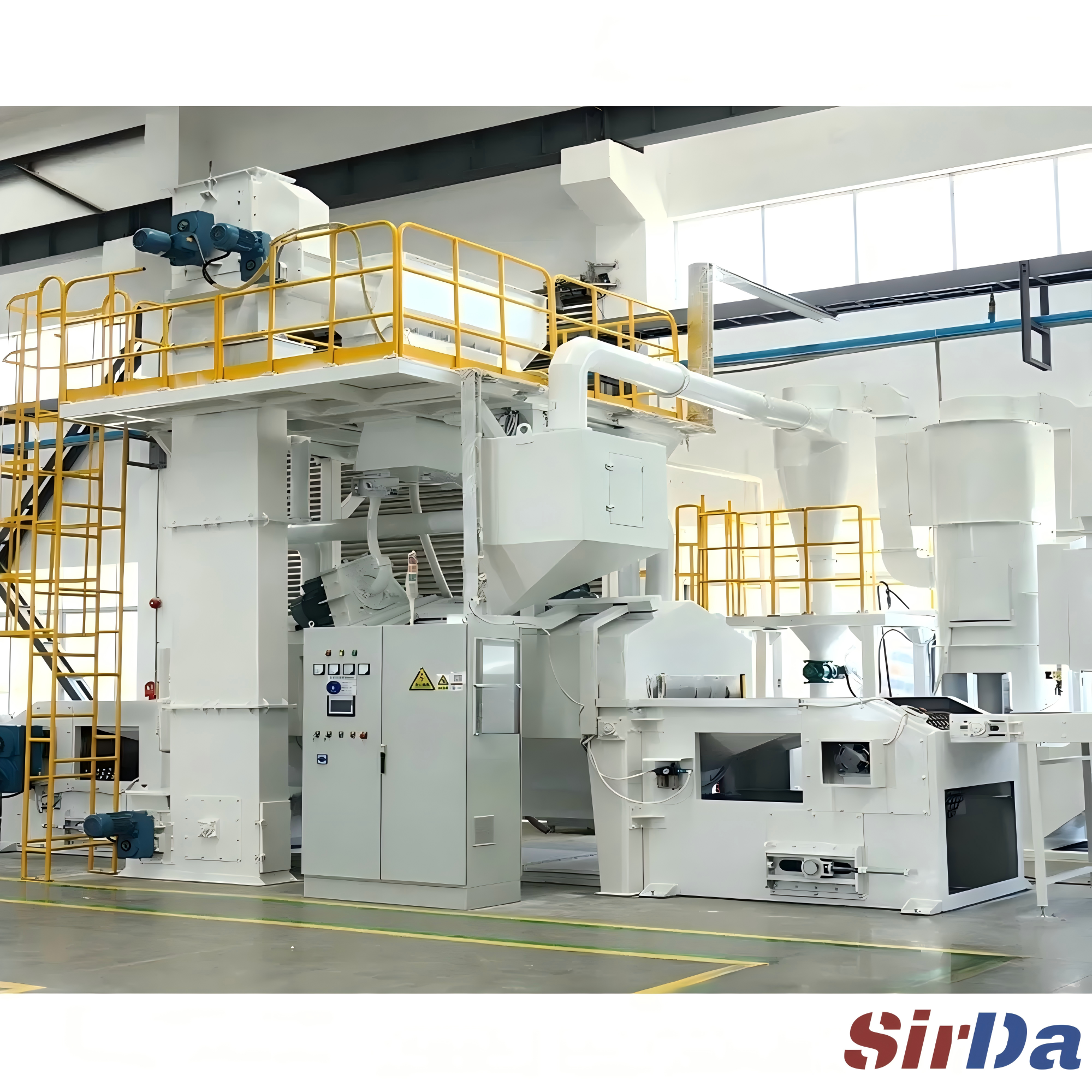
Where automated blast rooms actually go wrong
The machines that frustrate operators fail in a few predictable ways, none about the controller itself:
- Alarms that are never read — too many nuisance trips train people to acknowledge and ignore the panel. Every trip should either be fixed or removed from the sequence, and the alarm list belongs at shift handover
- Sensors that drift and are never checked — a media level switch that reads full on an empty hopper, or a pressure transmitter that reports a clean filter while blinded, quietly drives the process out of specification. Calibration belongs on the same schedule as the blade change
- Recipes nobody owns — anyone can edit a parameter set, so the set drifts. Lock parameters by role and route changes through the same review as any other process change
- Data nobody looks at — a trend that is never trended is just a log file. Intensity or dwell readings that are recorded but never plotted will not warn you that a wheel lining has worn through
- The network treated as trusted — once the machine is reachable from the plant floor, it is reachable from outside unless somebody segments it. Keep a physical means of disconnecting it
Before signing off the control package, stand at the machine and ask the operator three things: what does the panel tell you first when something is wrong, when the machine faults at night who knows and how fast, and which parameter do you change on your own. The answers tell you more about the control system than the specification does. A machine whose alarms are read is a machine whose interlocks matter; a machine whose operator can explain the recipe is a machine whose recipe is a controlled document; and a machine that reports its own state honestly is the only kind worth connecting to a network.
Automation in a blast room is not about removing the operator. It is about making the process legible enough that two shifts, two seasons and two languages produce the same surface.