
How to size a shot blasting machine for long castings
Sizing a blast machine for long castings comes down to three numbers: the workpiece envelope, the required hourly output, and the finish you have to hit. Get those wrong and you either overpay for capacity you never use or undersize the chamber and fight the job forever.
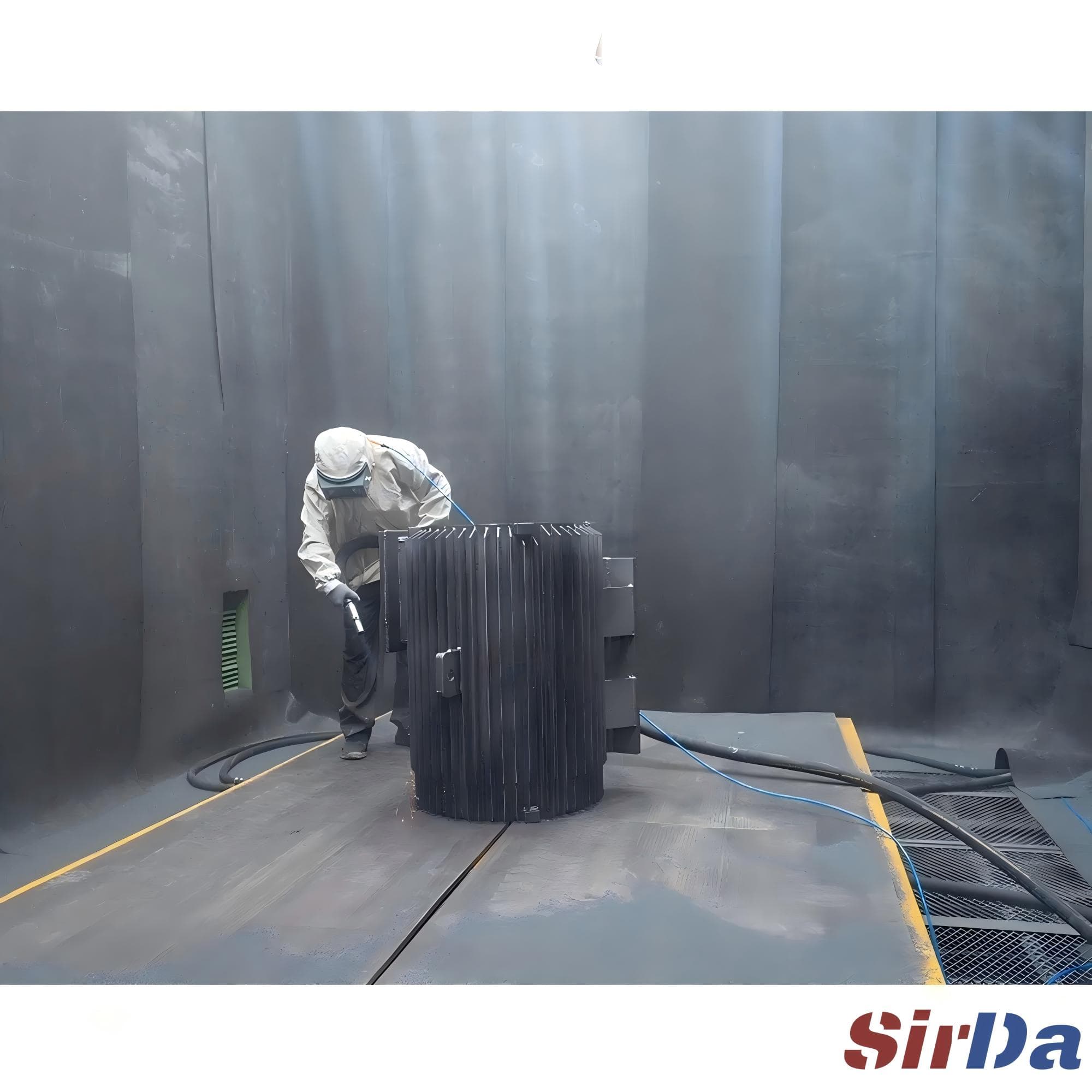
Most sizing mistakes are made before anyone looks at the parts. A quote goes out, a machine goes in, and six months later the shop is either paying for idle capacity or struggling to move a part that will not fit. Sizing is not really a single calculation. It is three independent constraints, and the machine has to satisfy all three at once.
Start with the workpiece envelope, not the weight
Every machine has a physical chamber, and the part has to physically enter it, sit on a fixture, and rotate or travel through the blast zone without touching anything. Measure the true maximum envelope: length, width, height, and maximum weight at the widest point. Weight matters for the hanger and conveyor drive; envelope matters for everything else.
The mistake that costs the most is forgetting that the part needs clearance to move. A casting that measures within the chamber dimensions can still be unusable if it has to rotate for full coverage and there is no room to swing. For long castings handled on a hook conveyor, add the fixture height to your vertical number and then add turning clearance for parts that rotate in the blast zone.
Output is a rate, not a batch size
The second constraint is how many pieces per hour you actually need. Calculate from your real production plan rather than the theoretical best case. A single shift with changeover time, a lunch break, and parts that vary in size will produce a very different number than a spreadsheet assumes.
- Divide your required monthly output by available production hours to get the real hourly rate
- Add a margin for setups, jam clearance and breakdown recovery
- Check the rate against the machine at the conservative conveyor speed, not the maximum speed on the brochure
The brochure speed is usually quoted at maximum conveyor speed with a light abrasive load. Running a dense cast iron casting at that speed gives a cleaner result but a much lower effective throughput than the headline figure implies. Ask the supplier what the rate is at the abrasive density you will actually use.
The finish requirement drives media and power
The third constraint is the surface you have to deliver. Rough castings headed for painting can tolerate a coarser cut point and a faster cycle. A machined casting headed for a coating spec, or a stainless component that must not show iron contamination, changes everything about media choice and nozzle energy.
This is where cheap machines quietly become expensive. A machine sized to the throughput target but underpowered for the finish will need longer residence time, which means slowing the line, which means you no longer meet the output target either. Size power and chamber together, or you are solving one problem by creating another.
Check the supporting systems before you commit
Two numbers often get dropped from a quote and then become expensive change orders.
Dust collection. Airflow is driven by chamber volume and abrasive volume flow. If the collector is undersized you will get dust leakage into the surrounding area, which is a health and compliance issue, not just a housekeeping one. Verify the collector has headroom for the media you plan to use, since dense media moves substantially more air than light media at the same conveyor rate.
Abrasive recovery. The separator and return circuit need to handle peak load, not average load. A separator that is undersized forces the operator to reduce the abrasive charge, and a reduced charge is the fastest way to lose the finish you designed for. Recovery also determines how much fresh media you need per hour, which shows up in operating cost long before it shows up in a maintenance problem.
What a good supplier will ask you for
Any supplier worth taking seriously will want the drawing envelope, the incoming condition, the monthly volume, and the required finish before quoting a number. If you are quoting machines, they have asked for the workpiece size and nothing else, the number you get back is a guess with a lead time attached. If you are buying, the supplier who skips these questions is the one who will be slow to support you later.
Send the drawing, not just the overall length. A drawing that shows the hardest geometry, the heaviest section and the required coverage is what turns a quote into a configuration.